How does a hybrid conversion work?
Project History
How did it all start?
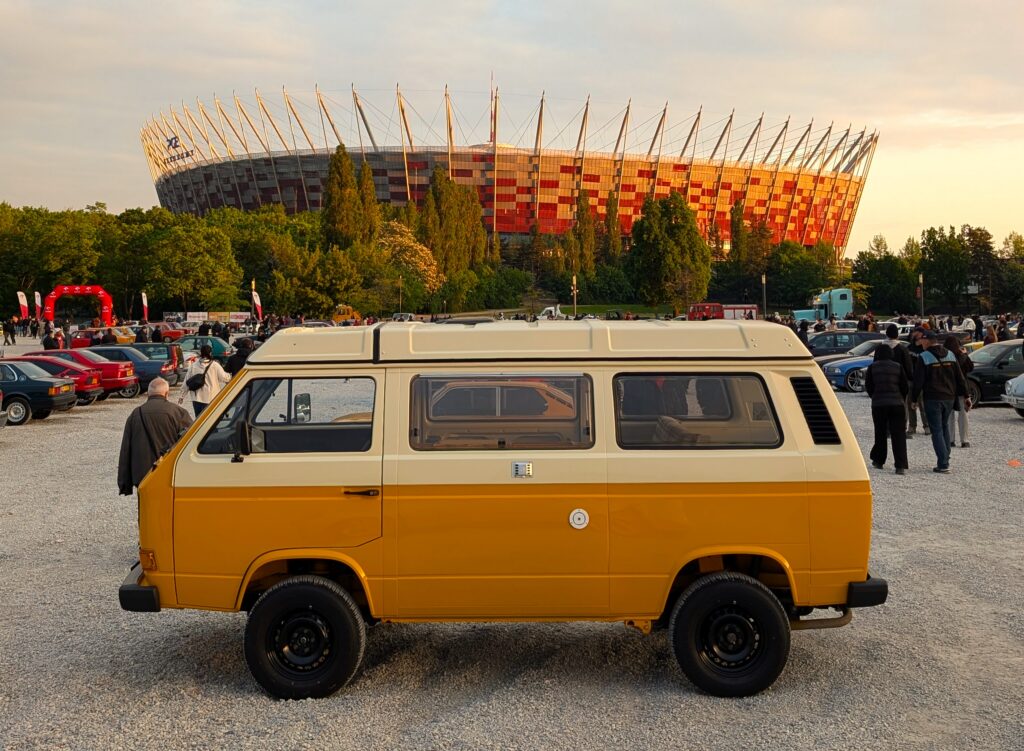
The first vehicle we converted to a plug-in hybrid 4x4 version was a classic 1981 Volkswagen Transporter T3/T25.
The main inspiration for creating such an unusual and modern solution was the desire to combine the timeless character of a classic body with a modern powertrain. We wanted to preserve the unique soul of the vehicle, while ensuring performance that simply allows you to enjoy driving. Four-wheel drive, on the other hand, opens up completely new possibilities and allows you to reach places that were previously out of reach.
This solution is particularly well-suited for buses and campervans, combining power, functionality, and modern technology.
Below, we present the technical details of our drive system.
Our drive details
In the described Volkswagen model, the factory internal combustion engine is located on the rear axle and drives the rear wheels. We, on the other hand, have installed an electric motor on the front axle and connected it to the front wheels. The schematic layout is shown in the graphic below.
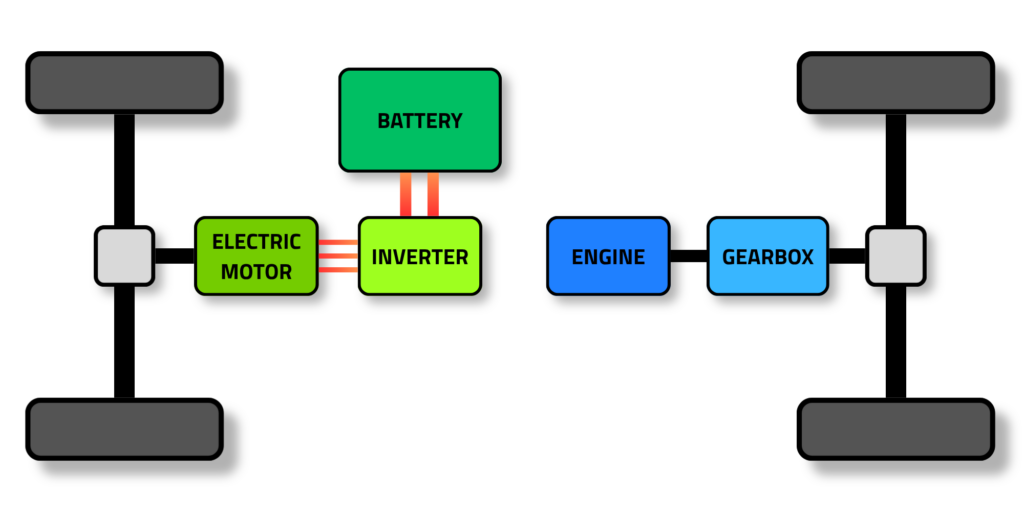
Neither of these drives are mechanically connected to each other in any way. This is a system often found in commercial vehicles (e.g., such as the Toyota RAV4 or Volvo XC60). Our proprietary vehicle controller, depending on the selected mode, appropriately controls and synchronizes the electric motor and the internal combustion unit, making it possible to drive using both engines simultaneously.
Our system can be connected to any internal combustion engine, even one that has no electronics at all. The only requirement is a manual gearbox.
Functionality
Thanks to the additional electric drive, the vehicle gains a range of new capabilities. The electric and internal combustion engines can work independently or power the car simultaneously, optimizing performance and driving characteristics.
Electric
Silent urban ride with range 30–50 km on a single charge (depending on driving style).
Hybrid
The electric motor automatically engages when more power and dynamism are needed. In this mode, the driver has access to the combined power of both units.
Off-road
Permanent all-wheel drive, ideal for tougher conditions. Both units work simultaneously, providing maximum traction and, if necessary, the full, combined power of both engines.
Internal Combustion
A traditional powertrain powered exclusively by an internal combustion engine.
Electric motor
For the conversion to hybrid, we used a permanent magnet electric motor, which is characterized by very high efficiency and excellent torque curve. This drive is integrated with the gearbox and differential.
Electric motor technical specifications:
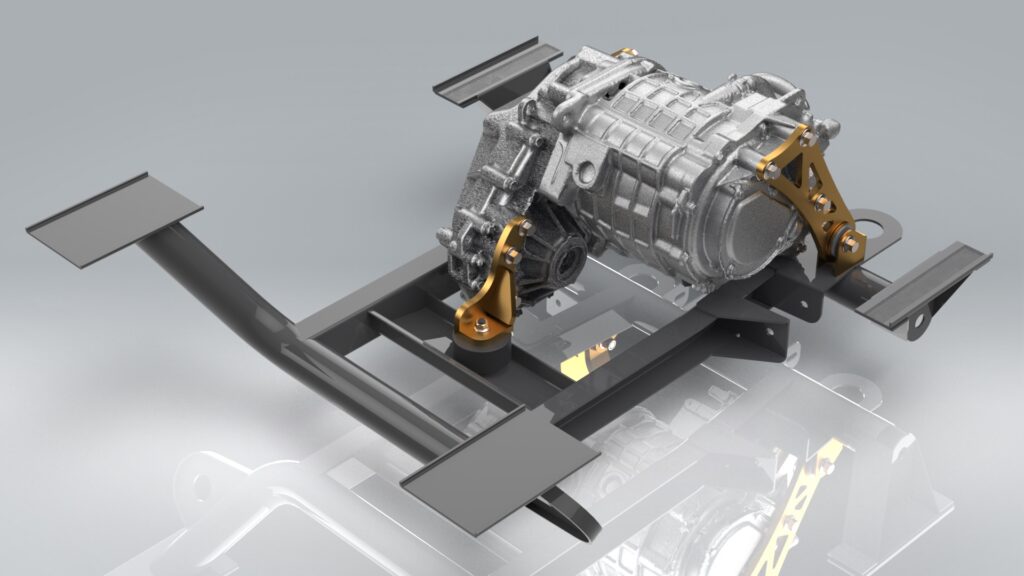
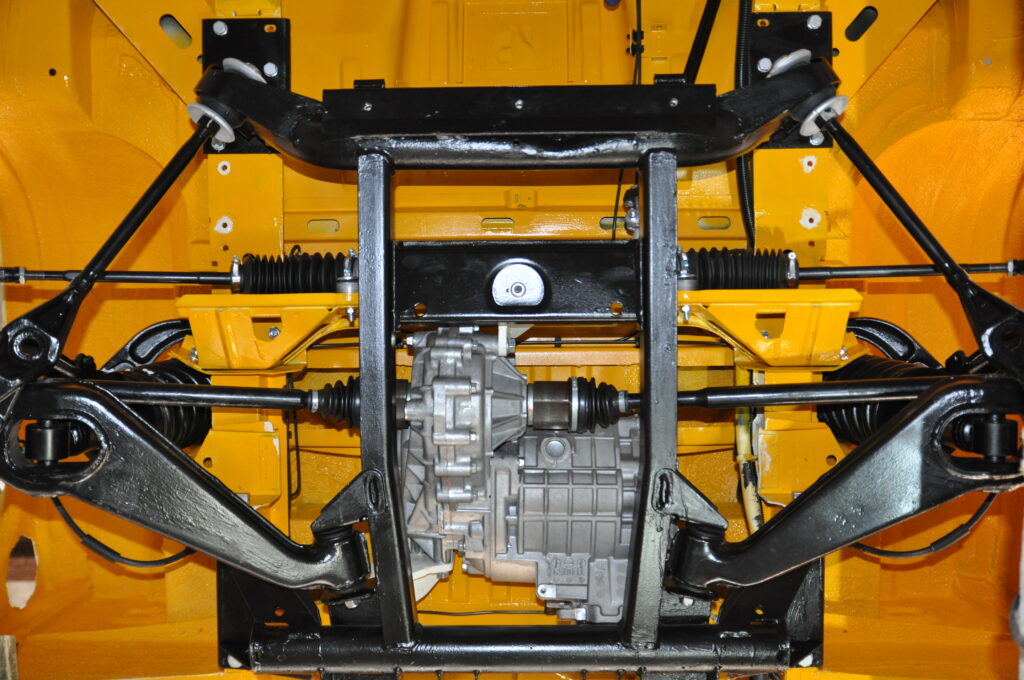
The electric drive was attached to the subframe using specially designed brackets made of structural steel. To ensure the highest level of safety, a strength analysis of the fastenings was carried out using the Finite Element Method (FEM) at the design stage. The photo above shows a 3D visualization from the CAD program. The next photo shows the electric drive mounted in its final position in the vehicle. By installing the motor on the front axle, the car gained all-wheel drive, which will increase its off-road capability.
Because the motor can also operate as a generator, it's possible to recover energy during braking and thus charge the batteries. This is also very useful during long downhill descents.
Both the engine and the remaining powertrain components are liquid-cooled.
Traction battery
The engine is powered by a high-voltage battery pack utilizing lithium-ion NMC (Nickel Manganese Cobalt) cells. Depending on the selected configuration, the battery offers a capacity of either 10 or 12 kWh. As a result, the hybrid-converted vehicle can travel dozens of kilometers in pure electric mode on a single charge (ranging from 30 to 50 km, depending on driving style).
Traction Battery Specification:
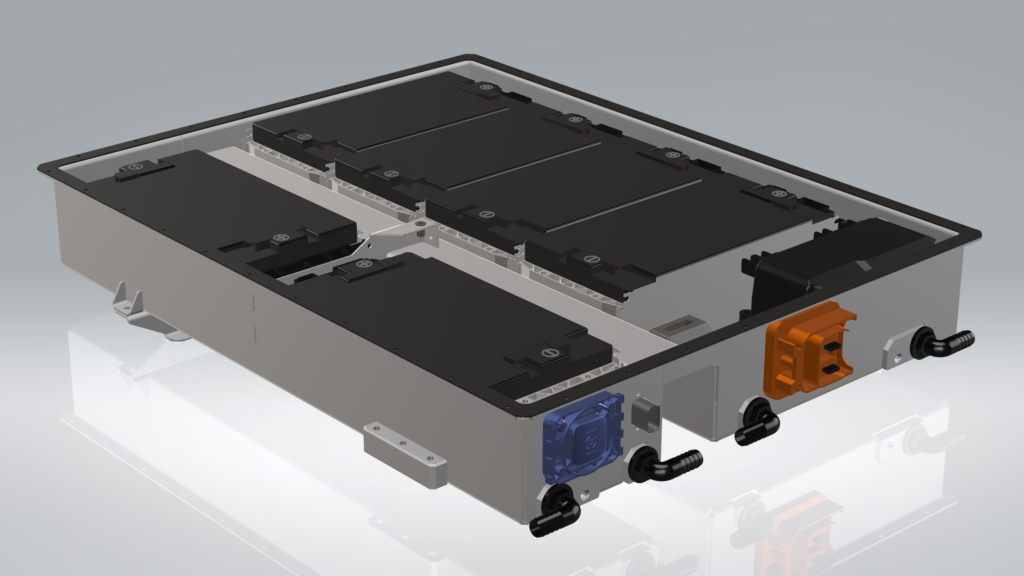
To optimize form factor, we designed a custom aluminum enclosure featuring an integrated cooling plate. The battery is mounted under the floor, preserving full interior space. The housing is resistant to mechanical impacts and harsh weather conditions. A liquid cooling system ensures peak performance of the traction battery under any conditions, while an advanced BMS (Battery Management System) monitors cell voltages, temperatures, and other vital parameters in real time.
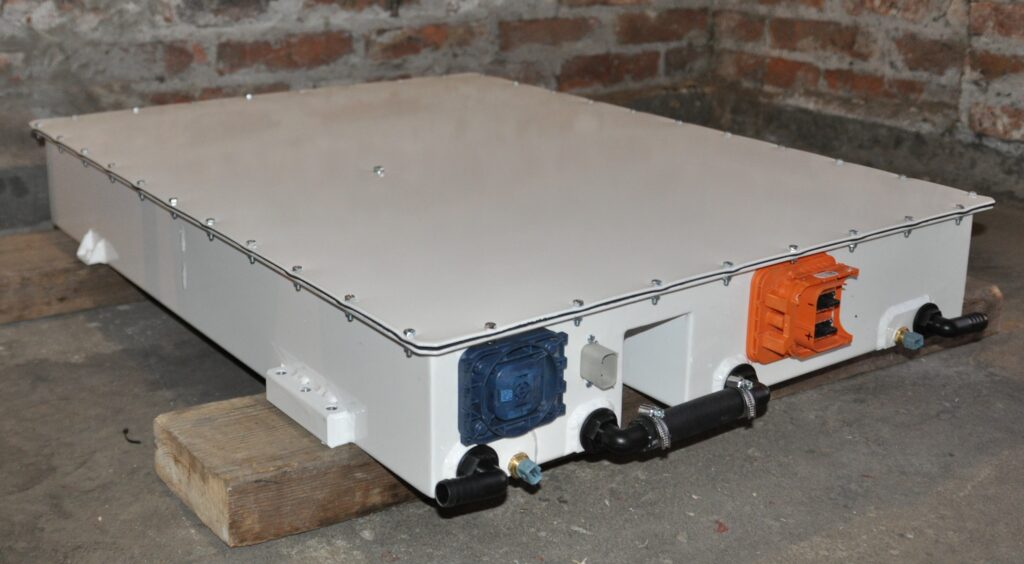
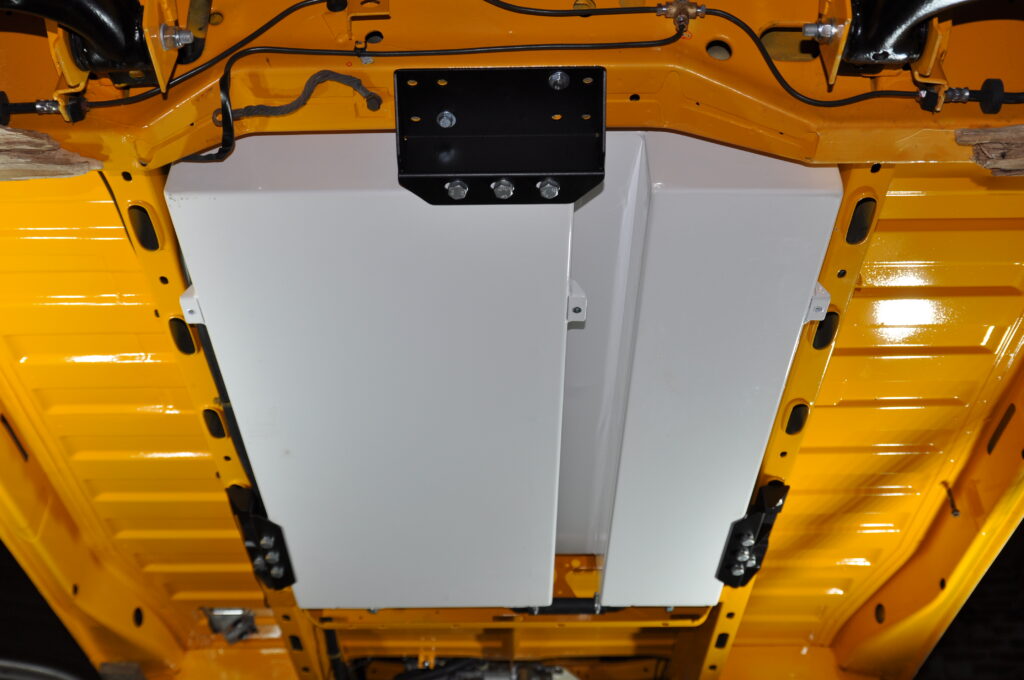
The primary design objectives for the enclosure were safety, low weight, and compact dimensions to ensure an optimal fit with the chassis layout. The image below shows the battery pack fully installed in the vehicle.
The battery can be recharged from a standard AC outlet using the 3.6 kW on-board charger, or while driving via the internal combustion engine.
Meanwhile, a DC/DC converter recharges the 12V battery from the high-voltage pack, eliminating the need for an auxiliary house battery.
Optionally, we can install air conditioning and a 1500W 230V inverter, both powered directly from the traction battery.
Electronics & Control System
Electronics represent one of the most critical parts of the entire project – it is this system that ensures the trouble-free operation of the whole powertrain.
The Vehicle’s Brain: Proprietary VCU
The VCU (Vehicle Control Unit), which I designed from scratch along with its proprietary software, acts as the vehicle's "brain," seamlessly integrating all components into a single, efficiently operating organism.
The main tasks of the VCU:
Control panel
For direct control over the system, I created a physical control panel. I focused on intuitive buttons and dials, allowing for safe parameter adjustments while driving without taking your eyes off the road. At the heart of this panel is a custom PCB designed by me from scratch, which reads the state of all inputs and communicates with the other control units.
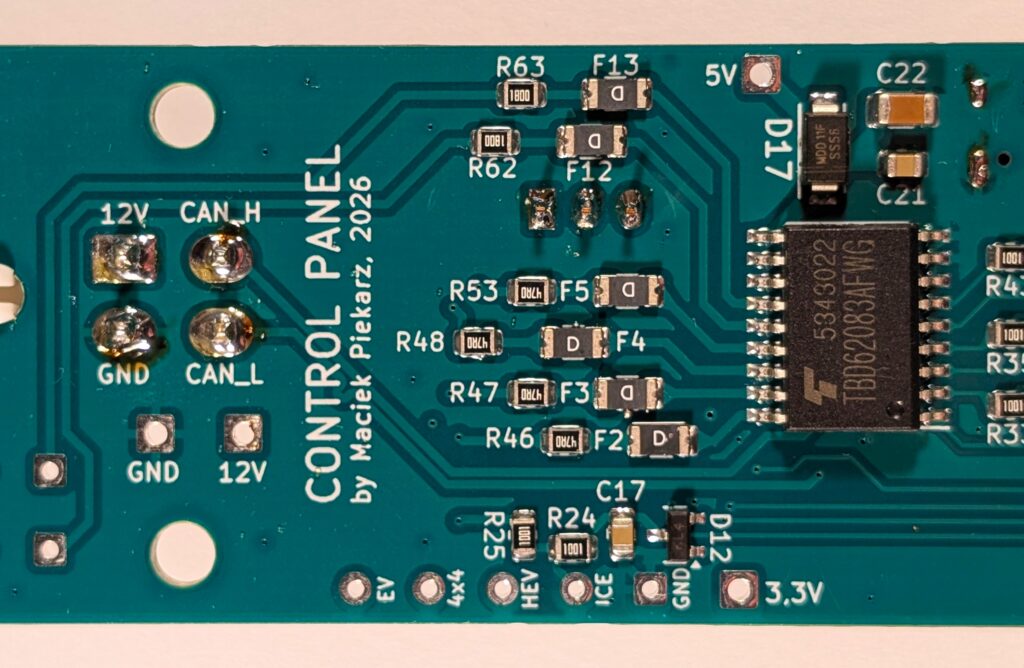
The driver can monitor and control the following in real time:
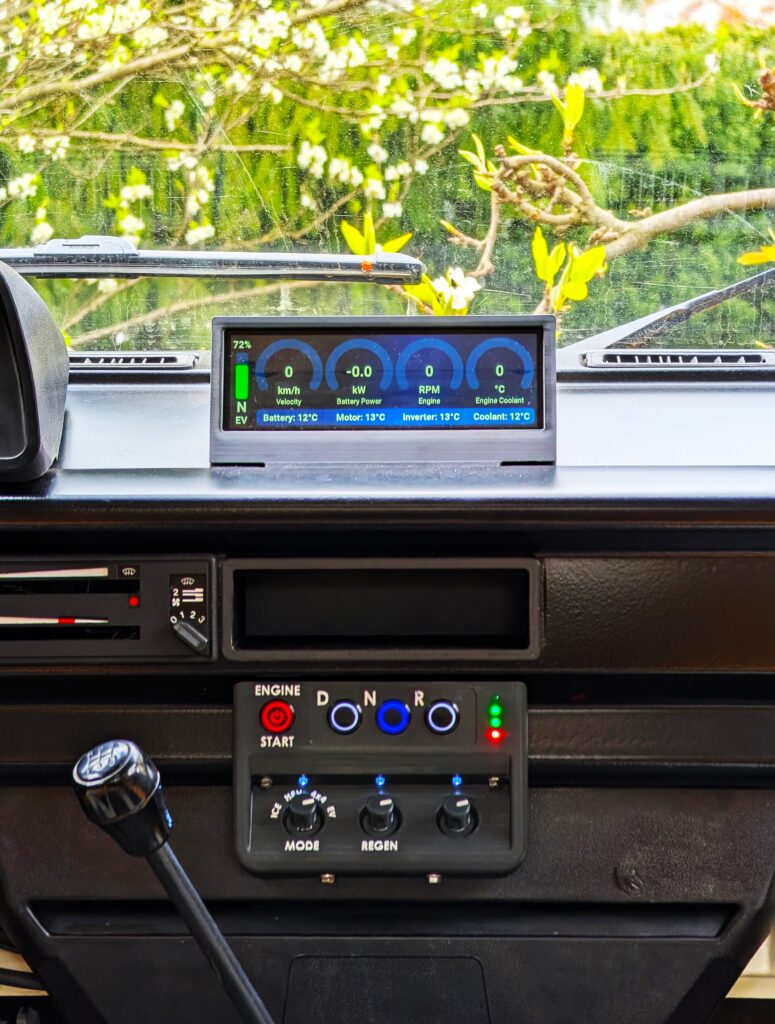
Interactive IPS LCD Dashboard
The physical panel is perfectly complemented by an interactive 7.9″ IPS LCD touchscreen, which serves as a digital data hub. Both the advanced software and the custom-fit enclosure are my proprietary designs.
Not only does the screen monitor and display key powertrain parameters in real time, but it also allows for convenient configuration of advanced functions:
Give your car new life today!
Contact us to learn more about hybrid conversion.
Check if your vehicle qualifies.